
Doña Mencía Historical Route
Doña Mencía Historical Route
Welcome to the Historical Route of Doña Mencía
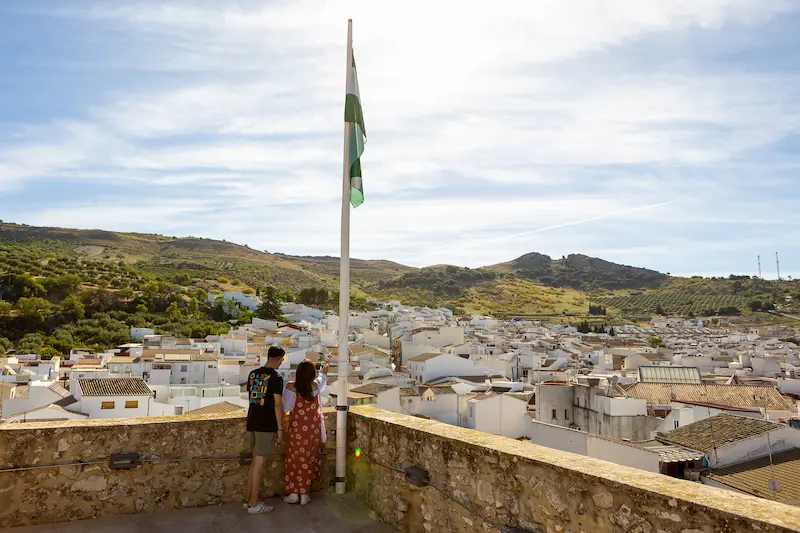
Welcome to the Historic Route of Doña Mencía. Today, we’ll travel back in time to discover the most emblematic corners of our town, a place that surprises with its rich heritage.
Among other sites, this route includes the Castle, a fortress with centuries of history that tells us about the beginnings of Doña Mencía and its uses over time.
We will also visit the Historical-Archaeological Museum, where we’ll learn about the archaeological legacy that has shaped our identity, from its origins to the construction of the Castle.
Llana Street, the town’s first street, and the entrance of the Old Church, which together with La Virgen Street offers one of the most beautiful views of Doña Mencía.
Historical Route Audio Guide
Get ready to uncover stories and curiosities that have shaped our town!
Get ready to uncover stories and curiosities that have shaped our town!
Points of Interest
1. Guitar Fountain
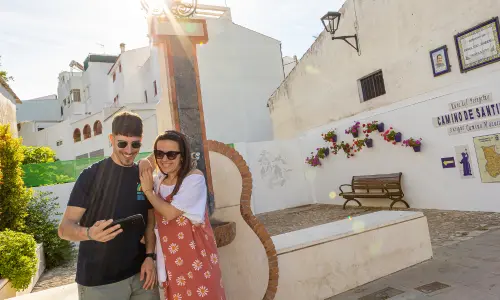
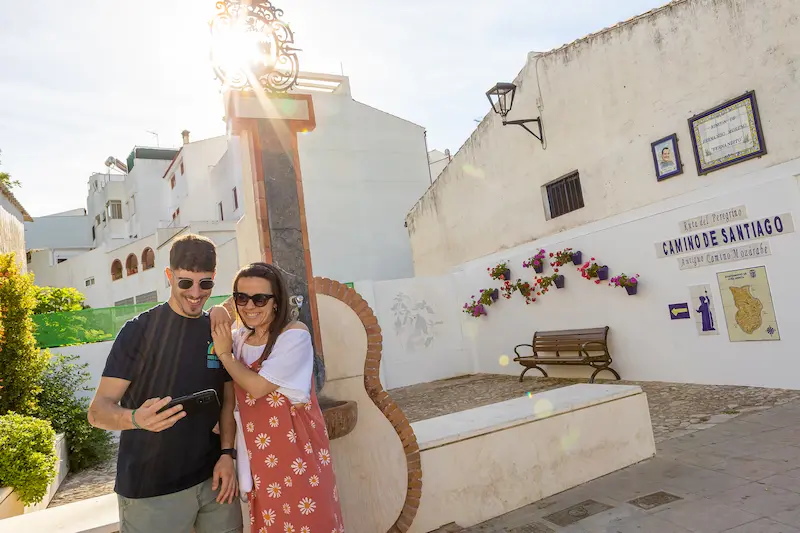
It dates back to 1969 and is located in the Rincón de Fernando Moreno “Fernandito,” a local ceramist from Doña Mencía closely linked to the Historical-Archaeological Museum, having carried out numerous reconstructions of pieces exhibited there.
At this spot, we also find the Camino Mozárabe, a branch of the Camino de Santiago that runs through Andalusia. From Cabra, it shares its route with the Vía Verde del Aceite and continues on to Baena.
The crochet canopy has been handcrafted by the women of the Buenavista Association, framing this space, which also features a phrase from Verso y cal.
2. The Oil Mill
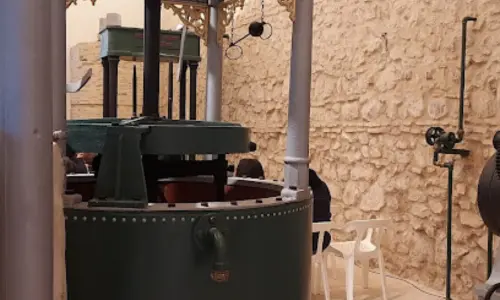
This is the only 19th-century oil mill still preserved in Doña Mencía. It was originally part of a complex that included two stately homes, connected by courtyards and passageways, and is protected due to its significant heritage value.
For many years, the mill lay in ruins, until the collapse of one of its walls in 2012 highlighted the urgent need for its conservation. After years of negotiations, the Town Council acquired the property, and restoration work began in 2022.
The restoration respected the traditional materials and architecture, and also made it possible to recover the mill’s original machinery. Today, this historic site is being developed as the Doña Mencía Olive Oil Museum—a place where visitors can learn about the traditional process of producing liquid gold and the town’s deep-rooted connection to olive cultivation.
3. Hermitage of the Holy Spirit
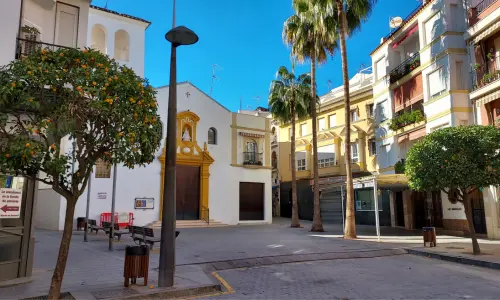
With a modest façade, it stands out for its simplicity and serves as the entry and gathering place for most brotherhoods and confraternities.
It has become a place to admire the beautiful images that parade during Holy Week throughout the year.
It is currently closed for renovations.
4. House of Culture
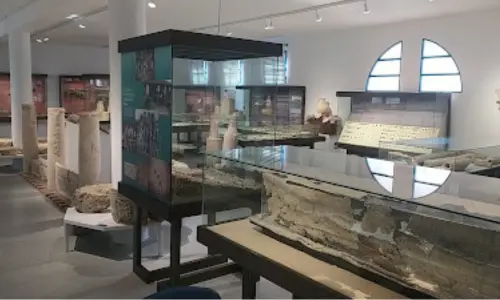
We are standing before the Casa de la Cultura of Doña Mencía, a building rich in history and memory.
Juan Valera y Alcalá-Galiano, a writer, diplomat, and academic born in 1824, had a close connection to Doña Mencía through his maternal family, the Alcalá-Galiano. On this very site once stood the ancestral home of that family—a gathering place for the local nobility and a residence where Valera himself is believed to have spent time. The atmosphere of Doña Mencía left a profound mark on his cultural development and his sensitivity toward Andalusia, something he would later reflect in his literary work.
Over time, the house lost its residential function and was repurposed for other uses, including serving as a Civil Guard barracks during the 20th century. Later, the Town Hall decided to reclaim the building for the cultural life of the municipality.
Today, transformed into the Casa de la Cultura and bearing the name of Juan Valera, this space houses the Historical-Archaeological Museum, the Municipal Library, and numerous cultural activities. It is a building open to all, where the memory and identity of Doña Mencía are preserved and shared.
5. Doña Mencía Castle
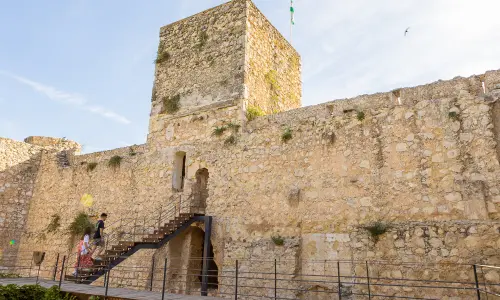
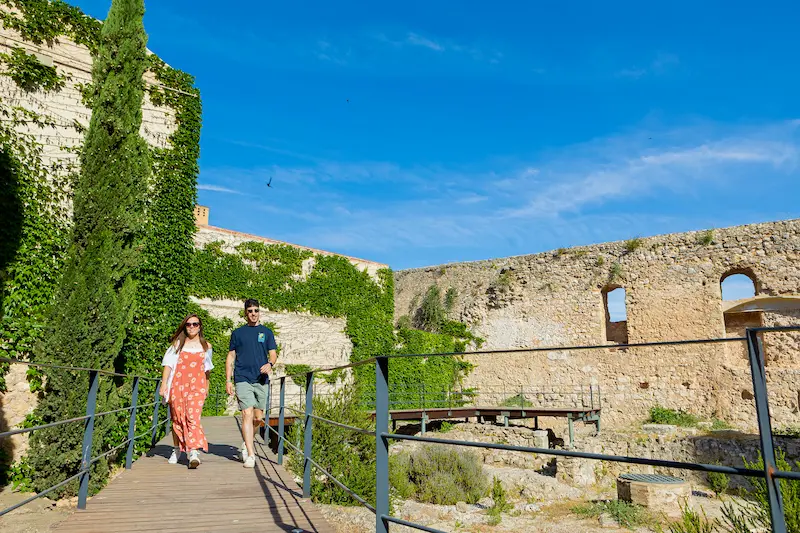
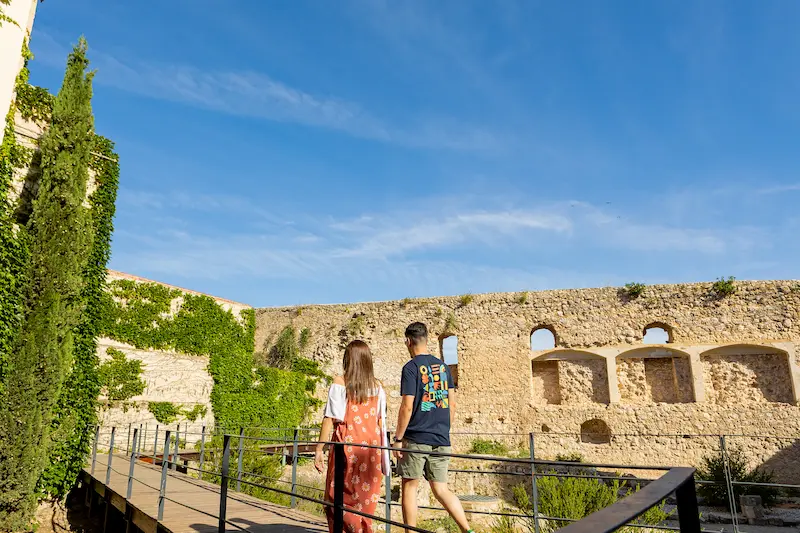
This complex, dating back to 1415, is the origin of the town, founded by D. Diego Fernández de Córdoba. It preserves much of the wall and the Keep Tower. If open, it can be visited for free, and you can learn its history through the audio guide.
6. Entrance of the Old Church
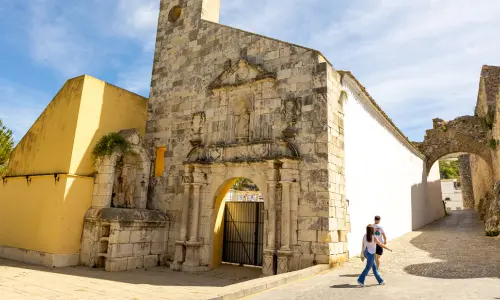
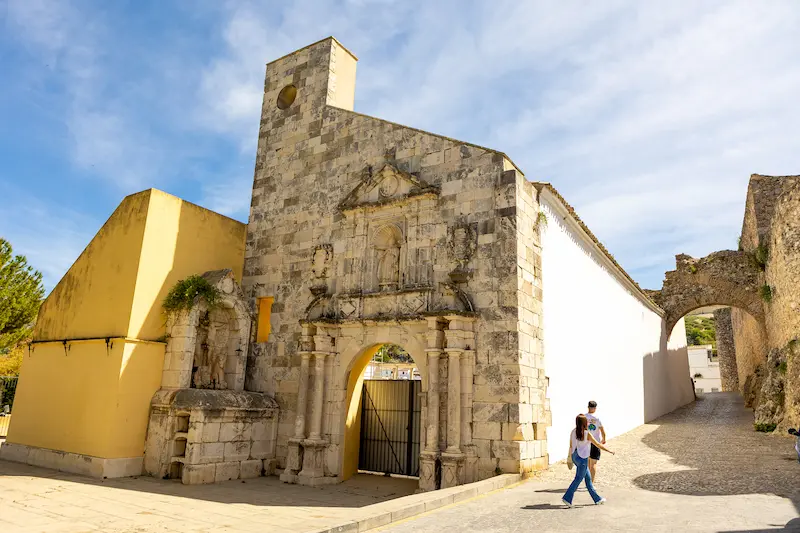
The Old Church, together with the arch located on La Virgen Street, offers one of the most beautiful views of Doña Mencía. Built in 1420 in the Baroque style, the space it once occupied is now used as an open-air auditorium, as it suffered a fire in 1932 and was almost completely destroyed.
Next to the Old Church, you will find two of the Valerian Route plaques. These plaques feature excerpts from the works of the writer and diplomat Juan Valera, who captured in his texts some of the most emblematic corners of Doña Mencía.
One of these plaques commemorates the old castle and the arch that connected it to the church, while the other speaks of the church itself, its altarpieces, and chapels. These literary testimonies reveal the close connection the author had with this place and the way he immortalized it in his writings.
7. La Virgen Street
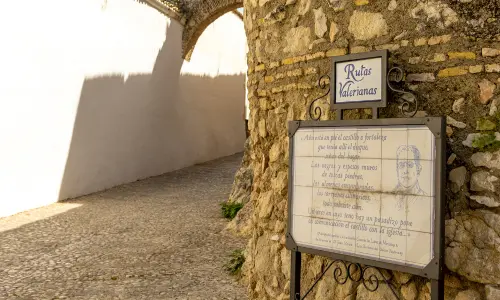
Together with Llana Street, it is part of the network of alleys in the old town. An arch on this street connects the Castle and the Dominican Church, known as the Arch of the Entretorres, above which, according to legend, there was a passageway linking both buildings.
8. Llana Street
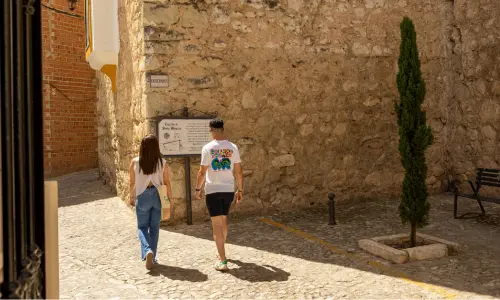
The first street of Doña Mencía, located in front of the Castle’s main gate. Every August 15th, a festival is held here in honor of the Virgin of the Head, whose image is placed in a niche in the Keep Tower. The parents of Juan Valera, the Cordoban writer and diplomat, had a house on this street. It is the one with a plaque on its façade.
9. Calvary Viewpoint and Hermitage
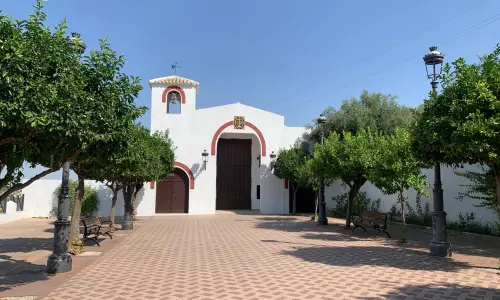
From this privileged spot, you can admire the charm and grandeur of Doña Mencía’s surroundings.
This site, at the foot of La Sierrezuela, offers a panoramic view of Sierra Abrevia and the El Laderón archaeological site.
The Calvary Hermitage has an octagonal layout, and its simple architecture gives it a unique character.
Inside, the images of Christ of Calvary and Our Lady of Greatest Sorrow are venerated, figures of great popular devotion, especially during Holy Week, when they take part in one of the town’s most solemn processions.
Historical Route Map
CAN'T SEE THE MAP?
ENABLE COOKIES from the FAQ section.