
Valerianas Routes
Valerianas Routes
Welcome to the Valerianas Routes of Doña Mencía
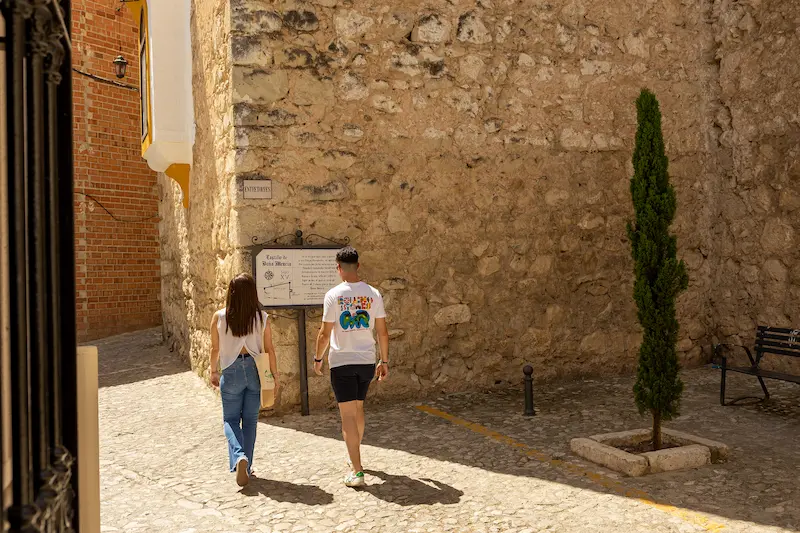
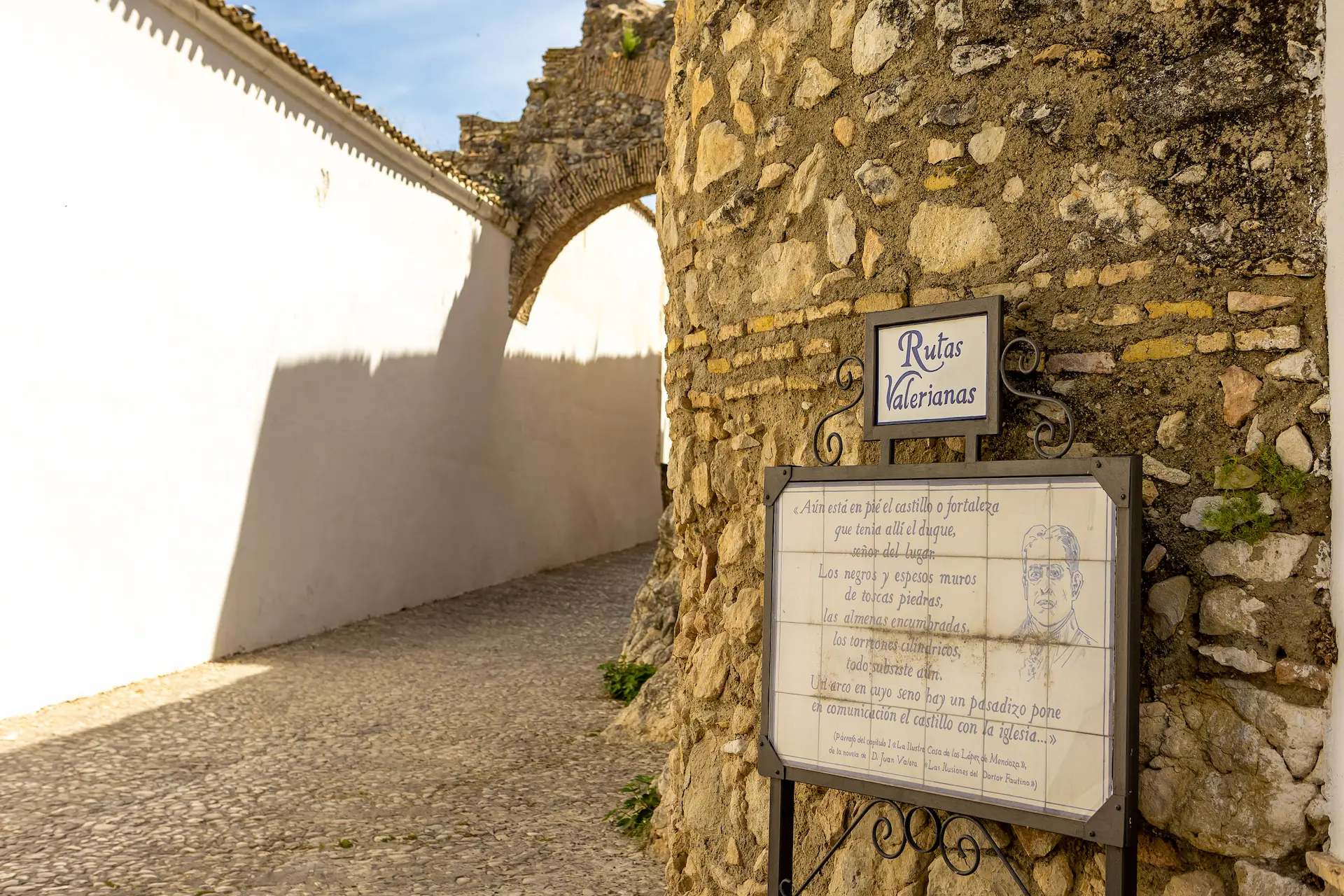
Welcome to the Valerian Routes of Doña Mencía. This tour invites us to discover the close relationship between the writer Juan Valera and our town, through the places and corners he immortalized in his work with special affection.
The plaques marking the route contain passages from his texts and are placed in the very spots the author mentioned, allowing us to relive his vision of the town as we stroll through its streets.
Valerianas Routes Audio Guide
Let yourself be carried away by literature and history on this route that turns Doña Mencía into an open book. Let’s begin!
Let yourself be carried away by literature and history on this route that turns Doña Mencía into an open book. Let’s begin!.
Points of Interest on the Valerianas Routes
1. Andalucía Square
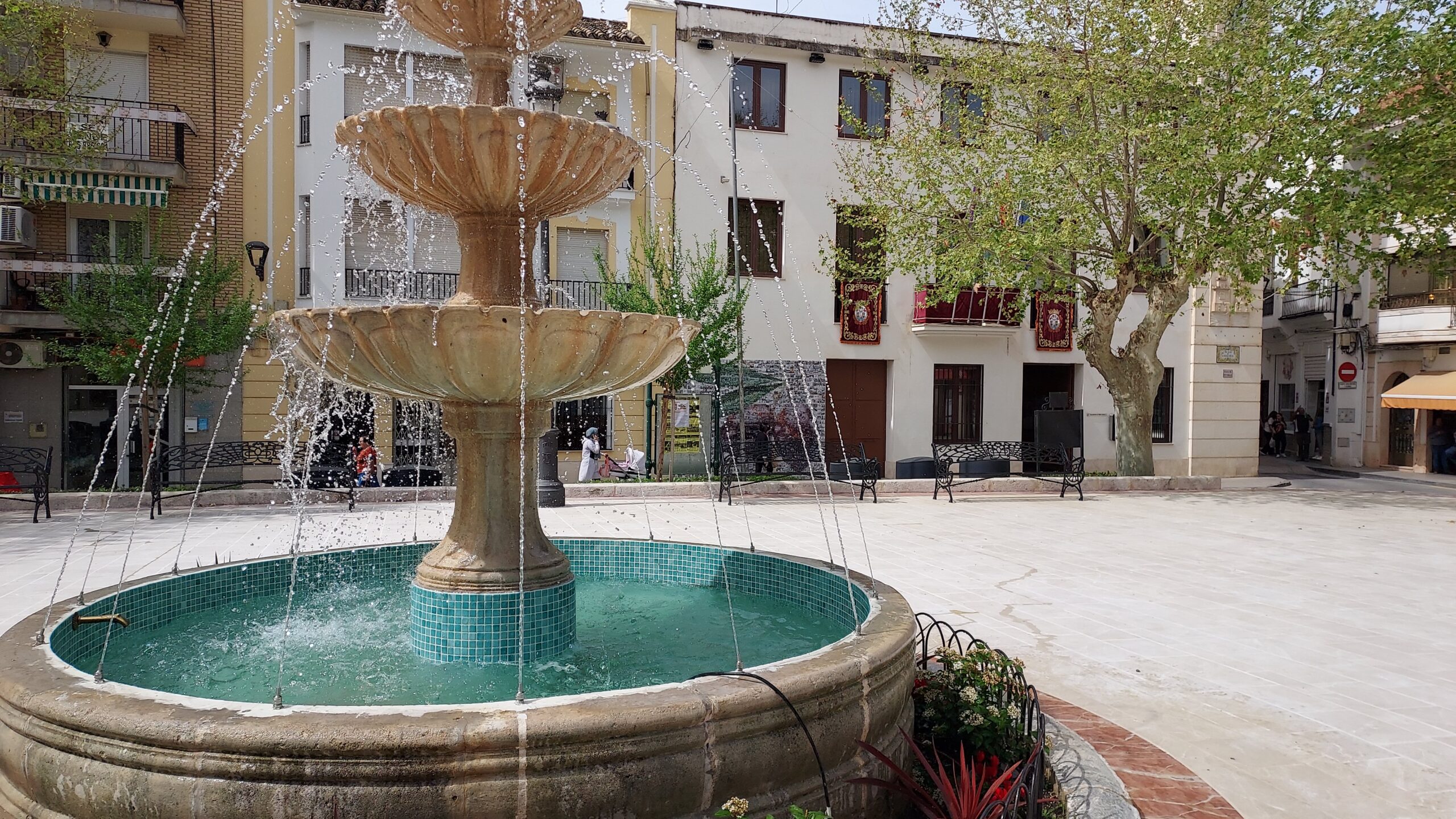
Andalucía Square, the heart of Doña Mencía, has not only witnessed the historical evolution of the town but has also served as a source of inspiration for the renowned writer Juan Valera, who spent part of his childhood here. This square represents the soul of a town that influenced works such as Juanita la Larga, where Valera subtly portrays Andalusian life and customs. Today, it remains a meeting point and a living memory for generations.
2. House of Culture
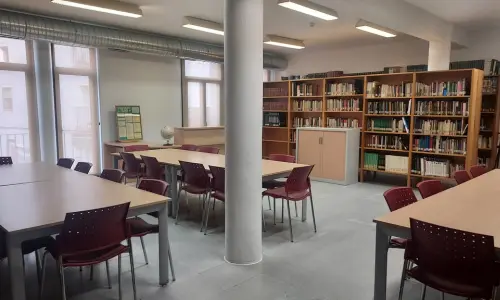
We are standing before the Casa de la Cultura of Doña Mencía, a building rich in history and memory.
Juan Valera y Alcalá-Galiano, a writer, diplomat, and academic born in 1824, had a close connection to Doña Mencía through his maternal family, the Alcalá-Galiano. On this very site once stood the ancestral home of that family—a gathering place for the local nobility and a residence where Valera himself is believed to have spent time. The atmosphere of Doña Mencía left a profound mark on his cultural development and his sensitivity toward Andalusia, something he would later reflect in his literary work.
Over time, the house lost its residential function and was repurposed for other uses, including serving as a Civil Guard barracks during the 20th century. Later, the Town Hall decided to reclaim the building for the cultural life of the municipality.
Today, transformed into the Casa de la Cultura and bearing the name of Juan Valera, this space houses the Historical-Archaeological Museum, the Municipal Library, and numerous cultural activities. It is a building open to all, where the memory and identity of Doña Mencía are preserved and shared.
3. Llana Street
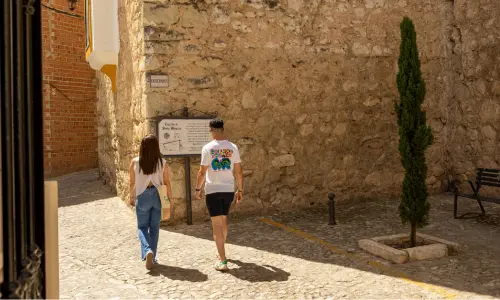
The first street of Doña Mencía, located in front of the Castle’s main gate.
Every August 15th, a festival is held here in honor of the Virgin of the Head,
whose image is placed in a niche in the Keep Tower.
The parents of Juan Valera, the Cordoban writer and diplomat, had a house on this street.
It is the one with a plaque on its façade.
4. Entrance of the Old Church
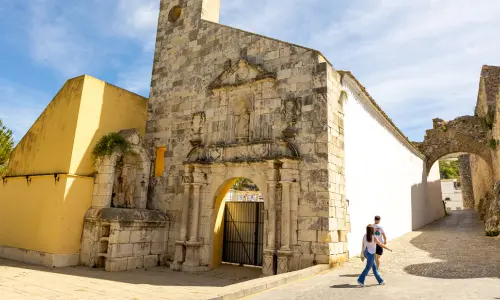
The Old Church, together with the arch located on La Virgen Street, offers one of the most beautiful views of Doña Mencía. Built in 1420 in the Baroque style, the space it once occupied is now used as an open-air auditorium, as it suffered a fire in 1932 and was almost completely destroyed.
Next to the Old Church, you will find two of the Valerian Route plaques. These plaques feature excerpts from the works of the writer and diplomat Juan Valera, who captured in his texts some of the most emblematic corners of Doña Mencía.
One of these plaques commemorates the old castle and the arch that connected it to the church, while the other speaks of the church itself, its altarpieces, and chapels. These literary testimonies reveal the close connection the author had with this place and the way he immortalized it in his writings.
5. Lower Fountain
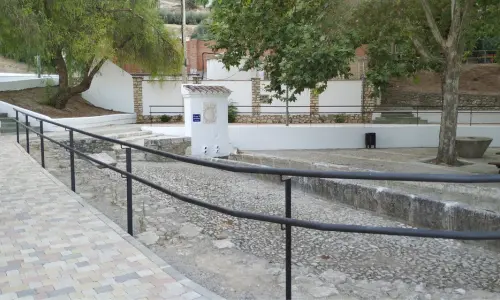
Built around 1653, when Doña Mencía became a municipality, it is one of the great remnants left by our ancestors.
The complex has distinctive features, with two separate sections: one serving as a watering trough, consisting of a large basin with four impressive spouts, and an interior section, the washhouse, surrounded by masonry walls and covered with a gabled roof.
The experiences and stories surrounding the Lower Fountain have been passed down from generation to generation, even appearing in the works of D. Juan Valera, who described it as the “Fuente del Ejido.”
6. Juanita la Larga Street
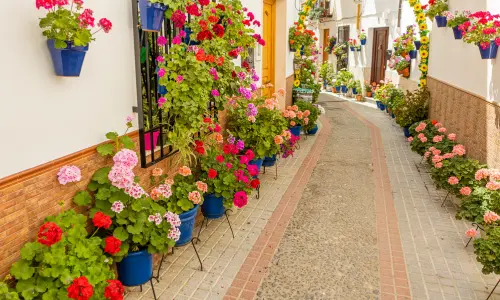
This corner, considered one of the most beautiful in the Subbética, pays tribute to Juanita, the protagonist of the famous novel Juanita la Larga, written by Juan Valera in 1895.
The story introduces us to a young woman who defies the conventions of her time. Courted by Don Paco, an older man of higher social standing, Juanita faces the criticism of her community with intelligence, determination, and wit, becoming a character who questions the role of women in 19th-century society.
Valera portrays her with tenderness and humor, giving her a voice of her own in a world that was not yet ready to listen.
Juanita la Larga Street, part of the group known as the Calles de las Flores, is the most awarded throughout the years. It has been recognized on several occasions as the most beautiful spot in the Subbética, receiving prizes both in the Courtyards, Facades, and Corners Contest of the Mancomunidad and at the provincial level.
Walking through it is a true delight for the senses. As with all the Calles de las Flores, the charm of this place is the result of the effort, dedication, and affection of its neighbors, who keep alive the tradition and beauty of this unique corner.
Valerianas Routes Map
CAN'T SEE THE MAP?
ENABLE COOKIES from the FAQ section.